Carbon deposits don’t announce themselves. They build up gradually in vaporizers, injectors, intake valves, and combustion chambers — quietly robbing your fleet of power, fuel economy, and reliability. By the time you notice the symptoms, the damage is already affecting your bottom line.
New-generation propane fuel systems have tighter tolerances than ever. That makes them more efficient — and more vulnerable to contamination. Without intervention, many vapor injection systems fail regularly and ahead of schedule.
•   Hard starts in cold or hot weather
•   Reduced power and sluggish performance under load
•   Vaporizers fouling faster than expected
•   Elevated toxic exhaust in enclosed warehouse environments
•   OSHA air quality complaints from floor staff
•   Higher HVAC costs from increased air turnover to compensate for exhaust
• Frequent, costly vaporizer maintenance — often on the supplier’s dime after warrantyPro 2000-EV Plus is added to propane at the point of supply. It works through your entire fuel delivery system while your equipment runs — no teardowns, no scheduled cleaning intervals, no downtime.
It dissolves and removes deposits continuously. Open-chain surface-active compounds liquefy carbon, wax, and oil and carry them through vaporizers, carburetors, injectors, and into the combustion chamber where they burn off completely. Equipment stays in like-new condition rather than degrading between service intervals.
It improves combustion. A combustion improver ensures complete burn of all hydrocarbon molecules — resulting in more power, better fuel economy, and a dramatic reduction in toxic tailpipe exhaust.
It solves the indoor air problem. Forklifts running Pro 2000-EV Plus treated propane produce significantly less exhaust in enclosed environments — fewer OSHA complaints, less heated and cooled air turnover, and a healthier workspace for your people.
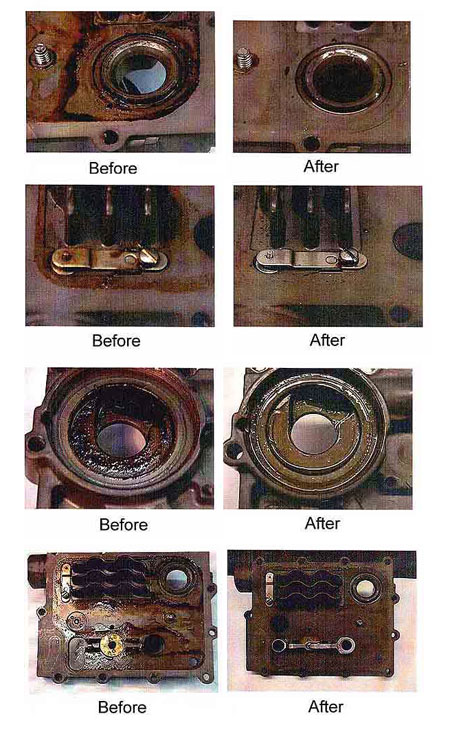
Before and after testing on vapor-injected Ford trucks showed dramatic vaporizer cleaning after just three tanks (120 gallons) of treated propane — with continued improvement beyond that.
A fleet that starts reliably, performs consistently, and stays on the job longer. Vaporizer maintenance drops. Indoor air quality improves. And your fuel does more work per gallon.
We’ll build a cost analysis around your fleet size and fuel consumption — so the numbers are yours, not generic estimates.